Moulds, plugs and master patterns
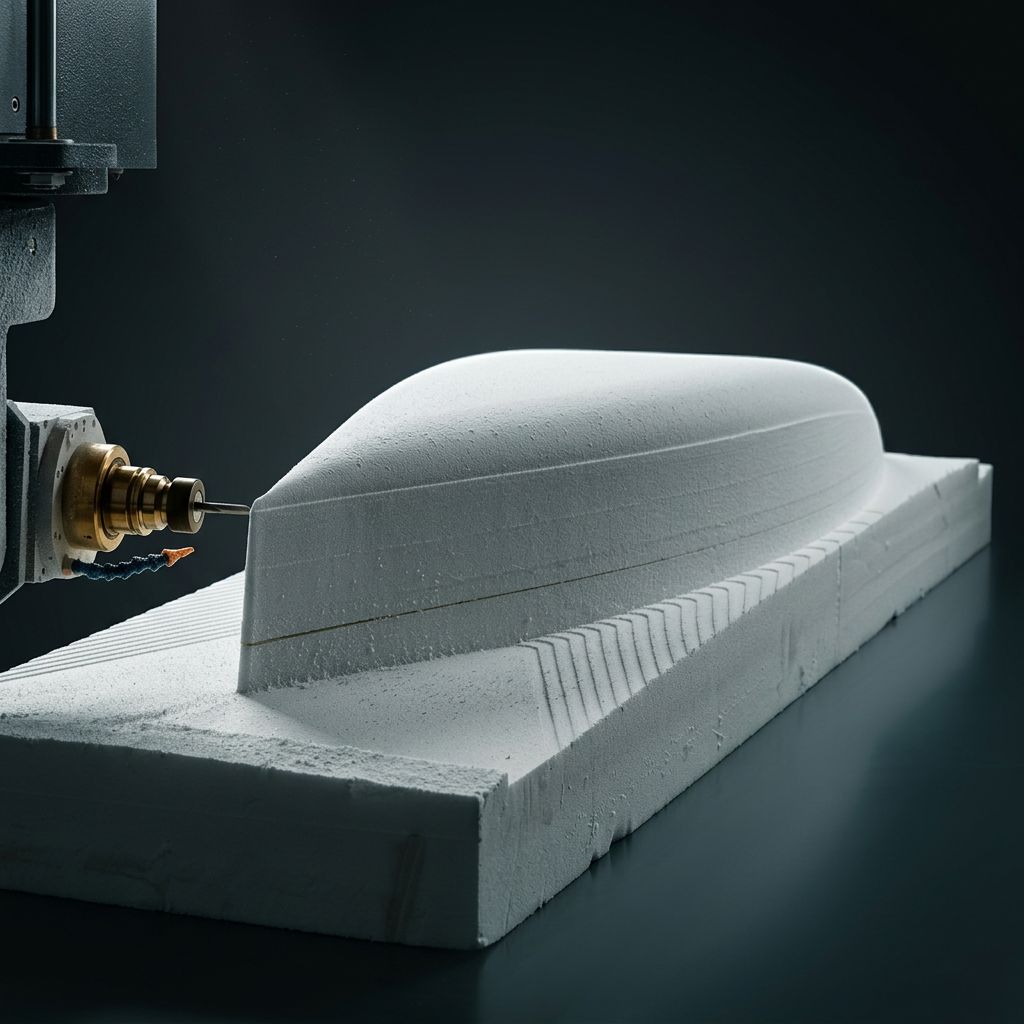
We machine moulds, plugs and master patterns from EPS and PU tooling board for composites, vacuum forming and foundry work. Large patterns are cut in sections aligned to the same reference, then sanded, filled and sealed to a stable working surface.
What a pattern shop actually needs
A master pattern or plug is the shape everything else is formed over: a laminate laid on it, a sheet pulled down over it, or a casting made from it. What matters is that the surface is accurate, continuous and stable enough to work straight off, without the laminator or moulder fixing the tool first.
We machine the shape, then prepare the surface. That is the difference between a block that has been cut and a pattern that is ready to use.
- Composite moulds, plugs and master patterns
- Vacuum-forming tools and forms
- Foundry patterns
- Tooling for production and repeat work
- Sculpted forms and curved architectural elements
Machines bigger than the bed
The five-axis bed takes up to 4 100 x 2 100 x 1 000 mm, and anything larger is machined in sections. Each section is positioned against the same reference, so the machined surfaces line up when the parts are assembled, and the seams can be sanded and filled afterwards.
Undercuts and compound curves are cut with the A/C rotary head in one setup, which keeps a curved surface continuous instead of leaving facets from re-clamped three-axis passes.
Surface preparation
After machining, patterns are sanded and filled where needed, then sealed or primed. The surface is stable enough for laminating, vacuum forming or a release agent, and it does not shed dust or fibres into the first layer.
Material and size
EPS and PU tooling board are the usual choices for masters because they machine cleanly and are light enough to move by hand. Material is billed at cost, with the required block size confirmed in the quote, and machining time on the gantry starts at 100 euros per hour.
Questions about moulds and patterns
How do you machine a pattern larger than the machine bed?
In sections, each aligned to the same reference so the surfaces line up when they are joined. Seams are then matched, sanded and filled as part of the pattern preparation.
What condition do patterns arrive in?
Machined, sanded and filled where needed, then sealed or primed. They are delivered ready for laminating, vacuum forming or a release agent.
Can you make a mould from our CAD model?
Yes. Send the model, a drawing or a photo with dimensions and we will confirm the approach, the material and the price before machining.
What is the difference between a plug and a mould?
The plug or master pattern is the positive shape; the mould is the negative tool made from it. We machine both the masters and the tooling that follows from them.
Have a pattern to make?
Send the model or a photo with the main dimensions. You get a written price, the material size and a realistic lead time, usually within one working day.
info@5axis.lt · +370 678 25 977 · Volfgangų g. 7, Paluknys, 21168 Trakų r. sav., Lithuania · Mon–Fri 08:00–18:00